What Makes The Espresso Machines So Effective? For COVID-19


Espresso Machines - The Best Espresso Makers in the UK
Espresso machines are the best way to have the best coffee experience. They're a labour of love but give you control over every aspect of your coffee.
They usually include an espresso tamper to smooth the grinds and a steamer to froth milk for cappuccinos and lattes.
1. Stovetop
There are approximately 98 million cups of coffee consumed in the UK every day and we have a fantastic range of stovetop espresso makers to help you brew a great cup of coffee. Known as moka pots, these appliances utilize pressure to make espresso-like cup of coffee without the need for any messy filter paper. They are a simple and user-friendly device that can enhance any type of coffee, and can be used with milk to make cappuccinos and lattes.
Moka pots are equipped with an inner chamber that is filled with water, while the ground coffee sits in a basket in between two pipes leading to the upper chamber, where the finished beverage is served. When the water is boiling in the bottom, it pushes itself through the grounds under high pressure. It then seeps into the upper chamber, where the aromas are released to you to take pleasure in. The result is an aromatic strong, rich and robust coffee that is delicious on its own or mixed with sugar and milk.
The main thing to bear in mind when buying a moka pot is the capacity of the pot. It is essential to make sure that the dimensions of the bottom chamber and the capacity of the basket are sufficient for your requirements as larger pots will require a long wait time while a smaller one might not be able to create enough pressure. We recommend that you also look at the material the machine is constructed of. Stainless steel machines are more durable and stronger but they tend to cost more.
You should also consider whether the appliance is compatible with your preferred heat source, whether it's electric or gas. Also, you may be interested in the other accessories available such as milk steamer arms that are used to heat up and make frothy milk in cappuccinos as well as lattes. You may also consider the number of cups you can make in one go, since this can be a great way to determine the ideal size for your needs.
We also suggest to check the base of the moka maker to ensure it fits on your burner. We found that certain models, like the Stelton collar espresso maker had a narrow base and were difficult to center on a gas burner while larger bases, such as those of the Bialetti Venus and London Sip stovetop espresso makers, produced better results. We also preferred models with thicker walls because this was proven to transfer heat more efficiently and prevent it from exploding too quickly.
2. Capsule
In a similar vein to the stovetop models, there are capsule coffee makers that can make cappuccinos, espresso and other drinks using pods. This is a great choice when you don't want deal with messing around with grounds, brewing and cleaning up - they provide a quick, simple and effortless method to get your caffeine fix in the morning.
You will have to purchase the coffee pods separately. There are a variety of brands available, including Nespresso Dolce Gusto, and Tassimo. There are also different sizes to choose from, so you can suit the size of your beverage and the type of coffee to your personal preference. The smallest model is the Nespresso Essenza Mini, which is ideal for small spaces and makes one cup at one time. A larger model is also available that can also accommodate larger cups, but it will cost more.
Illy Iperespresso is a stylish alternative for coffee lovers who want a more sophisticated machine that produces better tasting coffee. It's not the cheapest machine, but it produces excellent coffee. It's also simple to use. It has a clever function that lets it automatically adjust its settings according to the brand of pods it is using. This makes it one of the most adaptable machines in our opinion.
If you're interested in exploring the wide range of drinks you can prepare with a pod-based coffee maker, it's worth looking for a model that includes a milk carafe. This will allow you to explore the possibilities of cappuccinos and lattes. You can still make the most well-known drinks with a capsule machine without a milk carafe however, it's more of a hit and miss affair.
If you're considering buying a capsule be sure to check if it's compatible with ESE pods. It will have an adapter or basket that can be used with these smaller pods. Some of our models include this feature. This means that you can use the machine with Nespresso compatible pods, and also Dolce Gusto and Tassimo pods.
3. Manual
The name suggests that they are espresso machines operated manually designed for those who prefer a more traditional approach. They look similar to the OG espresso machine invented in Italy in the early 1900's and are operated by manually pumping water through the portafilter, locking it, then forcing water under 9 bars of pressure, resulting in a shot of espresso.
A manual espresso maker is often more of a labour of passion than a capsule machine because they require you to heat the water separately from your coffee, pour it into the chamber above the pre ground coffee or pods and then press down on the lever or plunger to create pressure and push the water through and into the cup below. This method can be difficult, time-consuming and tedious to master, but the final result is worth it.
Some of the more modern models like the Flair 58 and the Sage The Barista Touch Impress have taken a different approach to make it easier to control, they have utilised an electronic temperature controller known as a PID (Proportional-Integral-Derivative). This technology is found in immersion circulators and high-end toasters. It is designed to stabilise brew boiler temperatures. This is a great way to take away the guesswork surrounding the optimal temperature of brewing.
Rancilio, La Pavoni and other major brands make manual espresso machines. The majority of people who have worked in a coffee shop or cafe will be familiar with these names. They produce the large commercial espresso machines that have three or two heads that are found in coffee shops, but in 1997, they launched the Silvia, a semi-automatic manual espresso machine with a few bells and whistles that help to reduce the stress out of brewing.
Fully automatic espresso machines will complete all the work for you. They'll grind the beans and tamp them before pulling the shot, and even steam your milk. But they are expensive so you will require a decent cash flow to afford one.
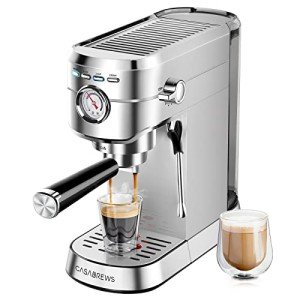
4. Semi-Automatic
If the idea of replicating an espresso shot from your favorite cafe at home is appealing to you and you want to replicate it, then a semi-automatic coffee machine is the best choice for you. These machines let you adjust your preferences over time, and dial in your espresso drink according to your mood at any moment.
These machines are outfitted with a portafilter as well as a steam wand. They have a similar brewing process to superautomatics, however they require manual steps like grinding the beans and inserting the portafilter. They also require more understanding and skills to operate since the brewing process is not controlled by a computer.
A semi-automatic machine which is good will have a removable filter and a tamper to compress the coffee grounds inside the portafilter prior to making. You can also control the amount and pressure of water used during the making process. home espresso machine can then customize your shots according to your preferences and the type of coffee beans that you are using.
Another thing to look for in a semi-automatic machine is the ability to adjust the temperature. This feature lets you set the brewing temperatures for your coffee beans in accordance with the way they taste. It will also help you avoid temperature fluctuations which is particularly important when it comes to the boiler that brews the coffee. Without a PID controller the brew temperature can swing by as much as 20oF from one cup to the next. This fluctuation is lowered to 0.1oF with a PID.
A few of the more expensive models come with a milk frother to make espresso drinks based on milk. This will help you create delicious lattes, cappuccinos, and macchiatos. The pitcher that froths should be able to handle comfortably and an spout that allows for easy pouring.
You should also select an option with a detachable filter basket, and a system that automatically doses the grounds. This will save you from having to perform grinding and tamping manually on your own. It also makes cleaning the machine much easier.